From zero or continuing
We adapt the level, rhythm and materials to the child's age, personality and previous experience.

Spanish 1:1
Individual online lessons with teachers who help children connect with Spanish through speaking, culture, games and a clear learning path.
We adapt the level, rhythm and materials to the child's age, personality and previous experience.
The child practices short answers, reactions and useful phrases in a safe atmosphere.
Lessons include games, music, videos and activities that make Spanish easier to remember.
Free trial lesson
30 minutes, free and with no commitment. The child meets the teacher, and the parent gets a recommendation for the best learning path.
Sign up by 30 September and get a start bonus: 100 PLN with 2 lessons a week, 55 PLN with one. 1:1 lessons only.
All times are shown in Polish time (Europe/Warsaw).
Parent reviews
“My 8-year-old daughter is delighted with lessons with Ms Denisse. During the lesson I can hear lots of laughter, songs and good fun from her room. At the end I often hear that it went by too quickly.”
Ania MajewskaFacebook reviewOpinie na Facebooku“I recommend Tortilla de Patatas lessons 100%. The lessons are very interesting, with an emphasis on speaking Spanish. My son looks forward to the next lessons with Sebastian, who has great contact with children.”
Anna PelikanFacebook reviewOpinie na Facebooku“I am happy. My boys are happy to take part in the lessons.”
Kasia PoprostuFacebook reviewOpinie na Facebooku“Great lessons, a great teacher, I recommend it.”
Kinga JaniszewskaFacebook reviewOpinie na Facebooku“The best choice if you want to teach your child Spanish! Learning in a great atmosphere, creative lessons and no boredom, so children absorb knowledge quickly and without pressure.”
Agnieszka BieńFacebook reviewOpinie na Facebooku“Huge commitment from the teachers. Interesting lessons, lots of speaking Spanish and a great approach to children. You can see the results!”
Katarzyna BieńFacebook reviewOpinie na Facebooku“The best lessons for children! Always a lovely atmosphere.”
Aleksandra PawlikowskaFacebook reviewOpinie na Facebooku“The best language school! Professional approach, great teachers and a wonderful atmosphere. I recommend it 100 percent!”
Wojtek BieńFacebook reviewOpinie na FacebookuSpanish curriculum
Parents can see how the Spanish program is organized by age and level. During the trial lesson we choose the best starting point and adapt the pace to the child.
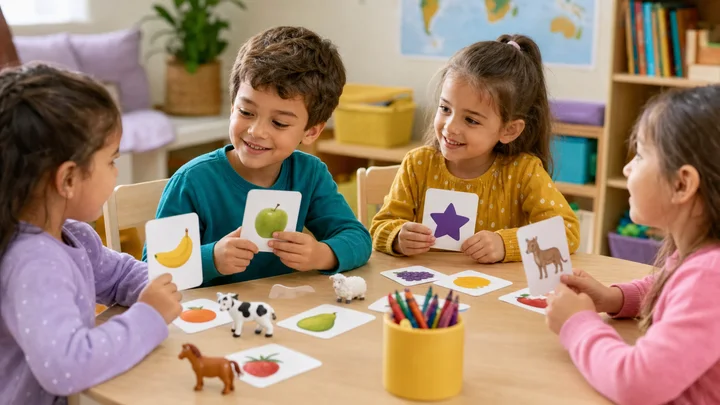
Young children meet Spanish through songs, visuals, movement, repetition and short reactions. The goal is comfort, curiosity and joy in the lesson.
Greetings · What is your name? · Numbers 1-10 · Colours
Animals · Food · Body · Emotions
Weather and clothes · Family · Home · Transport
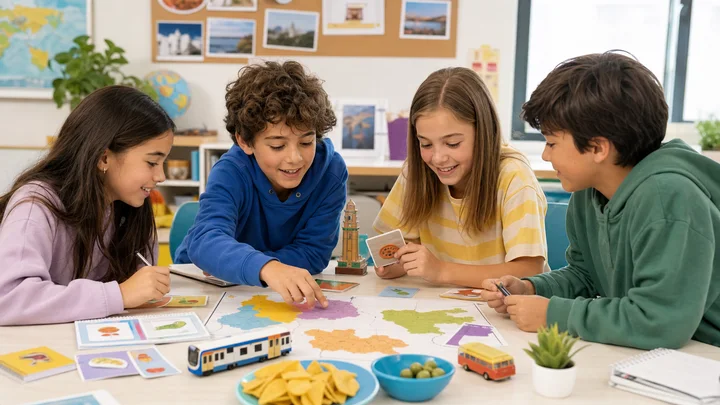
Primary-school children build wider vocabulary and start using simple sentences in context through games, speaking, visuals and review.
Greetings · Introducing yourself · Numbers 1-20 · Colours
Animals · Food · Body · Emotions · Days of the week
Family · Home and furniture · City · Transport · Professions
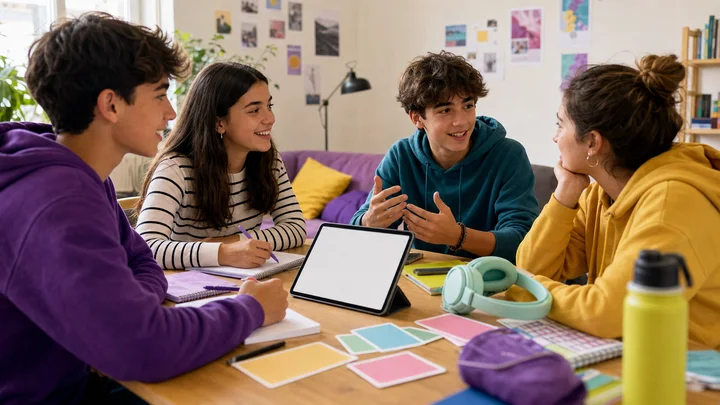
For older children and teens, lessons are less childish, more communicative and age-matched. Students talk about themselves, routines, interests and the world.
Formal and informal greetings · Introducing yourself · Likes and preferences
Emotions · Weather · Clothes · Family · Home
City · Transport · Professions · Abilities
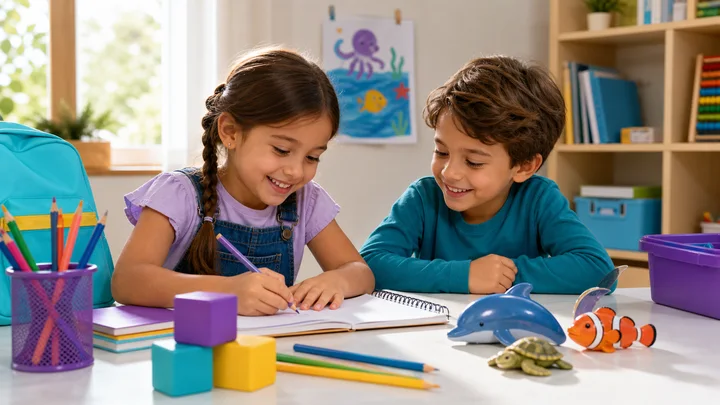
A short starting path for students who need to organize the basics before entering the Aventura series.
Numbers · Introducing yourself · Colours · My drawing
School materials · Aquatic animals · Review
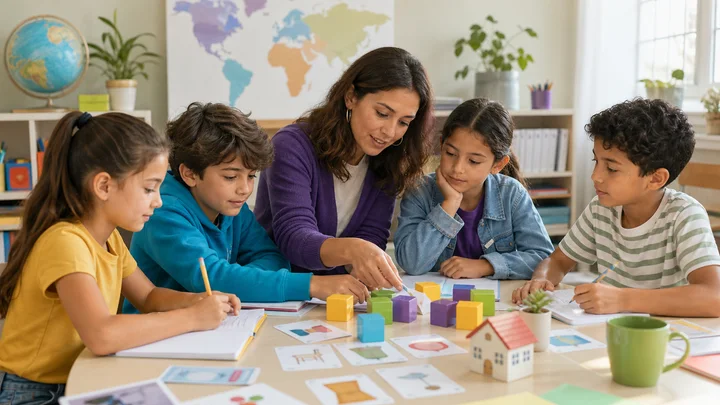
Students organize the alphabet, countries, nationalities and everyday vocabulary, then move into family, school and home.
Vowels · Alphabet · Countries · Nationalities
Colours · People · Objects · Food
Family · School materials · Home · Positions
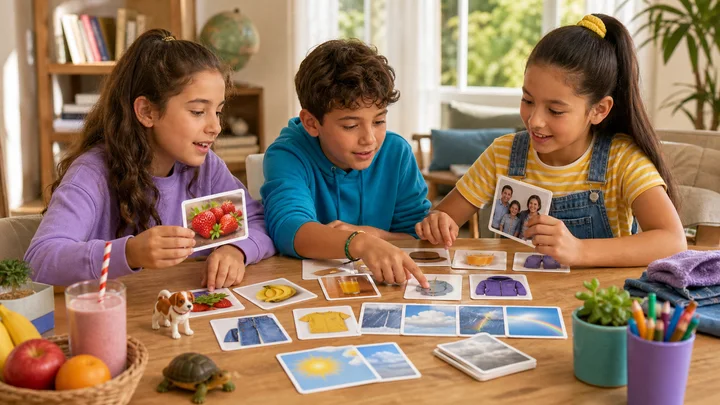
Students develop Spanish through a wider range of everyday topics, descriptions, dialogues and communication tasks. This is where vocabulary starts becoming more natural speaking.
Mood · Actions · Family · Home
Fruit · Food · Drinks · Animals
Body parts · Appearance · Clothes · Weather
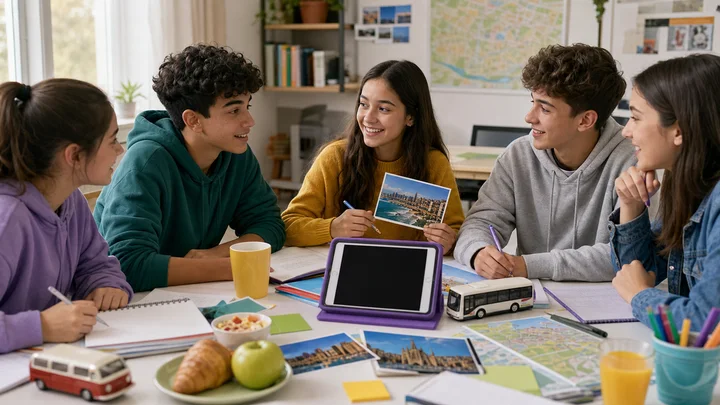
Students use Spanish in fuller situations: speaking about their day, surroundings, school, travel, interests and practical topics. The program builds confidence in longer answers.
Moments of the day · Daily activities · School · Time
Places in the city · Transport · Holidays · Movement
Farm · Hygiene · Breakfast · Meals
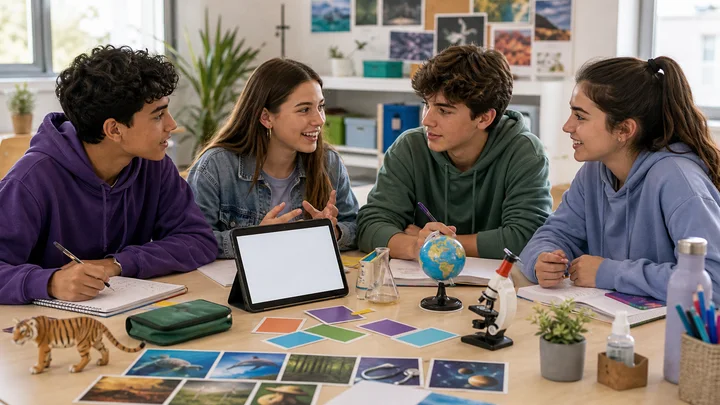
The most developed stage of the program: students work with a broad range of themes, more mature vocabulary and tasks that invite longer answers and personal opinions.
Media · Communication · Technology · Events
Space · Planets · Body · Symptoms · Medicine
Plants · Recycling · Wild animals · School subjects
Tortilla Learning Student App
The teacher chooses the materials. The student always sees a clear next step in one friendly space.


Who is it for?